Evidence ledger
What is confirmed
- Ceasefire agreement between Israel and Hamas brought the Gaza conflict to an end[1]
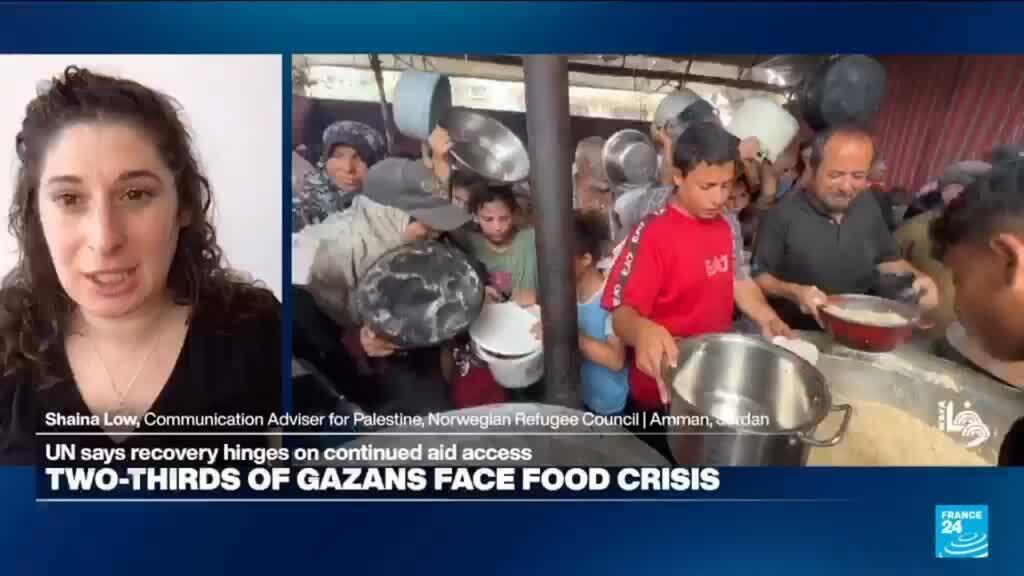
- Alison Sargent welcomed Shaina Low.[1]
- Shaina Low is Communications Advisor for the Norwegian Refugee Council’s Palestine mission.[1]
- Gaza remains trapped in a state of structural emergency despite a reduction in large‑scale hostilities.[1]
- Humanitarian actors are prevented from moving beyond short‑term relief because of extensive restrictions on aid, construction materials, fuel, and operational access.[1]
- The central issue is not simply the scale of destruction but the inability to reverse it despite the existence of a ceasefire.[1]
What remains disputed or unverified
No disputed central claims are recorded for this story.
Nine Months of Truce, Little Progress
On 24 October 2025, Israel and Hamas agreed to a ceasefire that officially ended the Gaza conflict. Yet, the Peninsula has seen only a reduction in large‑scale hostilities, not a corresponding improvement in living conditions for its residents. According to telecommunications liaison Alison Sargent, the region is still trapped in “a state of structural emergency” despite the balance shifting from active war to a fragile pause.[1]
Sargent welcomed fellow relief specialist Shaina Low, Communications Advisor for the Norwegian Refugee Council’s Palestine mission, to discuss how Gaza’s post‑conflict realities have diverged from the expectations set at the time of the truce. Low stated that the ceasefire did not translate into rapid, substantive rebuilding or recovery.[1]
Aid Blockades Continue to Hinder Relief Efforts
Humanitarian agencies continue to be constrained by extensive restrictions on the delivery of aid, construction materials, fuel, and overall operational access. These limits have prevented the transition from short‑term relief measures—such as food distribution and medical assistance—to longer‑term reconstruction initiatives aimed at restoring homes and infrastructure.[1]
Even as battle lines receded, the regulatory environment that governs the movement of essential goods remains largely unchanged. Consequently, the workforce and equipment required to rebuild damaged neighborhoods cannot enter Gaza in sufficient numbers, stalling reconstruction plans that were supposed to commence next year.[1]
The Real Barrier: Inability to Reverse Destruction
Low emphasised that the central issue is not merely the scale of the destruction incurred during the conflict but the persistence of a structural emergency that now prevents the reversal of that damage, even in the presence of a ceasefire. Without change in policy and logistics, the region risks remaining in a cycle of emergency relief rather than sustainable development.[1]
Version and update history
- Version 1 · — Initial source-grounded generation
No published comments yet. Be the first to add useful context.